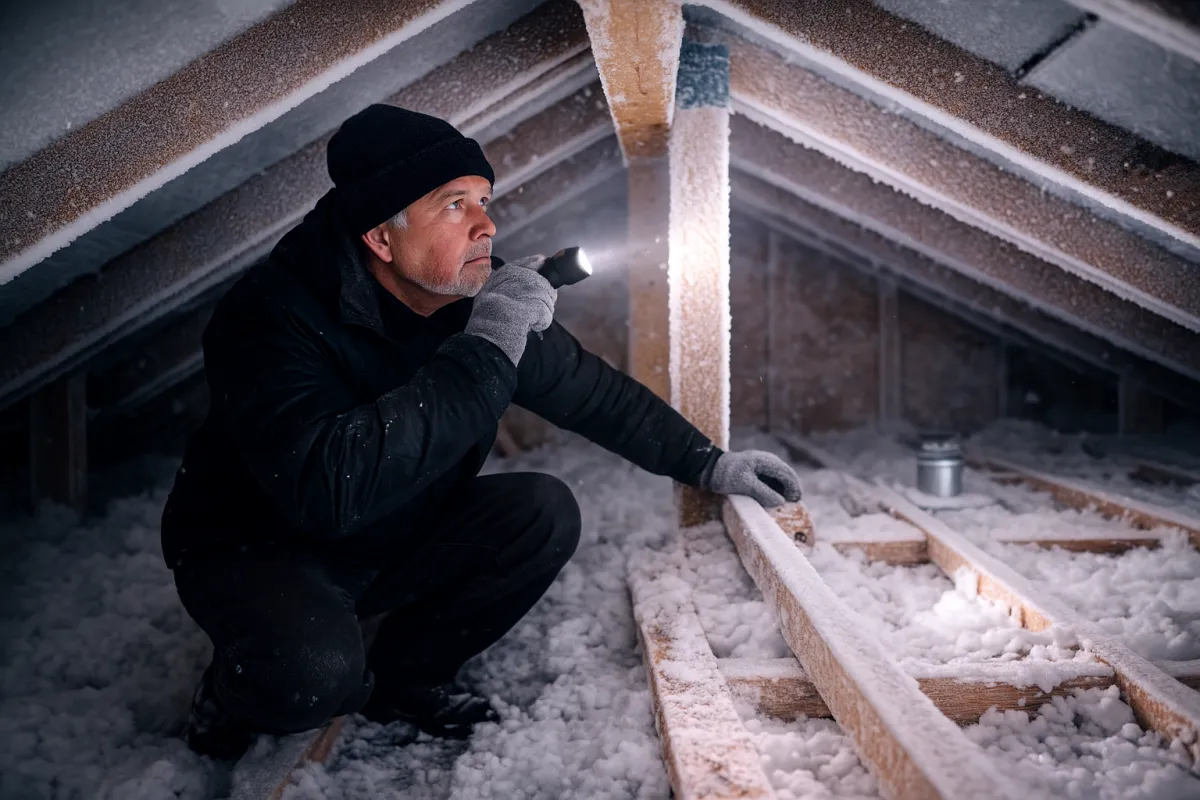
Why a Winter Home Inspection Can Save Thousands
Winter in Maine has a way of exposing problems that stay hidden during warmer months. Ice dams form where insulation is weak, cold air filters through unsealed gaps, and moisture begins to collect in attic spaces where warm air rises and condenses against cold roof decking. For homeowners, especially in older homes or properties with long-standing maintenance issues, winter is when small problems become very noticeable — and expensive if ignored.
A winter home inspection, especially during cold weather, can reveal issues that a summer inspection might miss. From attic frost buildup to frozen pipes to heat loss you can feel in your wallet, winter inspections help identify risks before they become emergency repairs.
At Madden Home Inspection, we believe winter is more than just a season — it’s an opportunity to find hidden problems early and save homeowners thousands in the long run.
How Winter Helps Reveal Hidden Problems
A winter inspection reveals conditions that summer masks. In cold weather, a trained inspector can see:
Frost buildup in the attic
Ice dams forming on the roof edges
Heat escaping through gaps in insulation
Condensation & moisture stains
Drafts around windows & doors
Furnace stress indicators
Slow drainage due to freezing soil
Radon spikes in closed-tight winter homes
Issues that are “fine” in July become obvious when temperatures drop below freezing.
1. Ice Dams — The Silent Roof Destroyer
Ice dams occur when attic heat melts snow on the roof. Water runs down, refreezes at the edges, and creates a ridge that traps meltwater. That water has only one place left to go:
Back under shingles.
Signs your home may be at risk:
Icicles hanging from the edge of the roof
Interior stains on ceilings or top-floor walls
Damp attic insulation
Water spots around framing
Left untreated, ice dams lead to:
❌ Mold growth
❌ Rotting plywood sheathing
❌ Damaged shingles
❌ Insulation saturation
❌ Interior water damage
A winter inspection pinpoints weak insulation zones, warm air leaks, and ventilation issues that cause ice dams — before repairs snowball into thousands of dollars.
2. Attic Frost & Moisture — Easy to Miss in Summer
When warm indoor air rises and hits a cold attic surface, it condenses into frost. Over several freeze/thaw cycles, melted frost can drip onto:
Joists
Insulation
Drywall
Electrical wiring
Moisture is one of the biggest threats to a home. A small ventilation issue now can become expensive mold remediation later. Winter inspections catch this at the perfect time — while it’s still visible.
3. Heat Loss = Higher Energy Bills
If your roof is losing heat, your wallet will feel it. A winter inspection uncovers:
Missing insulation
Air leaks around light fixtures
Gaps in attic access doors
Poorly sealed vent penetrations
Drafty windows/doors
Correcting heat loss often pays for itself in one to two heating seasons. You save money for years to come.
4. Frozen Pipes Risk Detection
Areas at higher risk include:
Crawlspaces
Unheated basements
Sink cabinets along exterior walls
Garages with plumbing
Poorly insulated pipe runs
A winter inspection can identify cold zones that freeze pipes — and prevent costly bursts or water damage.
5. Structural Weakness Under Snow Load
Snow is heavy. Ice is heavier.
Excess roof weight exposes issues like:
Rafter sag
Weak truss connections
Rot in hidden deck areas
Insufficient support beams
Catching this early protects the entire structure of the home.
Why a Winter Inspection Can Save Thousands
Ignoring winter problems often costs more than fixing them:
Delayed IssueCost LaterIce dam remediation$2,000–$10,000+Burst pipe + water damage$5,000–$25,000+Mold remediation$3,000–$30,000Roof replacement$8,000–$25,000Attic insulation upgrade$1,200–$5,000
A winter inspection identifies risk — before the repair bill arrives.
When Should You Schedule?
Best time windows:
After first major snowfall
During prolonged freezing periods
When icicles form
When heat bills spike unexpectedly
Before listing or purchasing a home
If you’re thinking about selling, a pre-listing inspection in winter shows buyers you aren’t hiding anything — increasing trust and value.
Madden Home Inspection — Winter Smart. Maine Smart.
We know Maine homes — old farmhouses, waterfront cottages, modern builds, and everything between. We inspect in real winter conditions, identifying problems others miss.
A winter inspection with Madden includes:
✔ Full attic inspection (moisture, frost, insulation)
✔ Ice dam assessment & roof-edge review
✔ Ventilation & heat loss analysis
✔ Infrared thermal imaging
✔ Pipe freeze risk evaluation
✔ Window/door draft inspection
✔ Radon testing (winter peak season)
✔ Water quality testing on request
Protect your home, your investment, and your budget.
📞 Call Madden Home Inspection — 207-745-4237
Winter is the best time to find what summer hides.

